
University of Richmond student Georgia on art school in Australia, and having heaps of fun
What is the quintessential Aussie experience? Study abroad student Georgia Leakey could tell you. She knows all about Aussie slang, culture, and “shrimp on the barbie.” She was self-conscious about being American. “They’re gonna know,” she said.
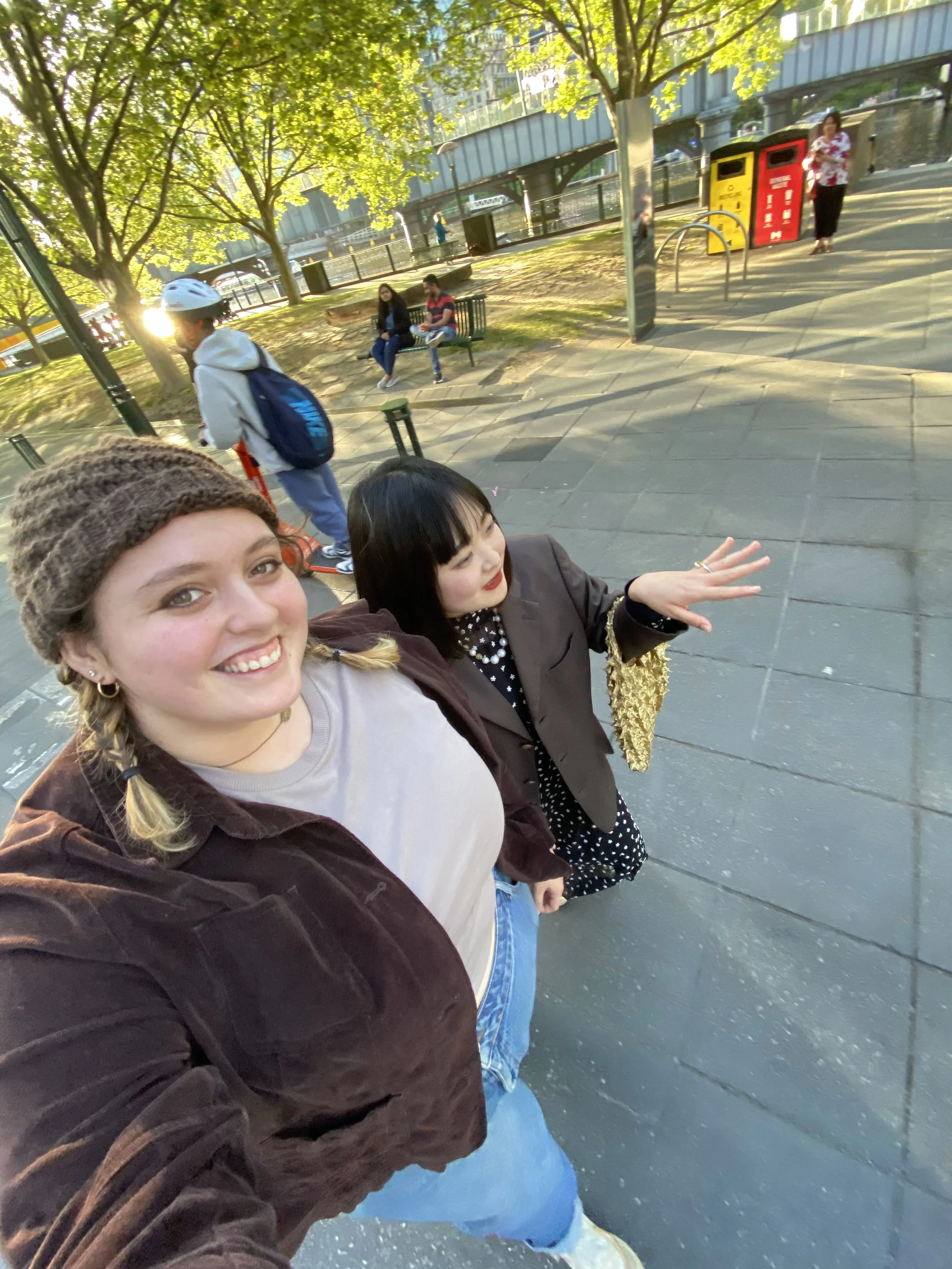
After she arrived in Australia, Georgia felt insecure about her Australian accent and cultural differences. She quickly learned that in Australia, “heaps” means lots of something. She also noticed that Australia's view of the U.S. resembled Canada’s feelings toward the U.S.
Georgia's journey got off to a rough start when, just before leaving the U.S., she missed her flight from L.A. to Melbourne by showing up at the wrong terminal. This mistake resulted in the most expensive flight ticket she’s ever purchased. Georgia bought the tickets through a third-party airline, which resulted in her taking out her first and only student loan to buy a $2,700 ticket on her sister's credit card.
Despite the disastrous first leg of her adventure, Georgia quickly took to Melbourne. She loved Fitzroy with its vintage clothing stores, cute restaurants, and hot pies — small pies with meat in them. In Fitzroy, thrift shopping is known as “op shopping” — a phrase unique to Australia.
Soccer is known as “footy,” the Australian football league. The fans root for different neighborhood teams in Melbourne. One night, Georgia decided to go to an AFL game. It was a busy night —bar hopping, watching the game. She didn’t remember the name of the team, but she does remember that their colors were green and yellow. She hung out with a Kiwi from New Zealand and women from Japan and Canada; they rolled cigarettes and chatted late. They were older than Georgia. They talked about their experiences in Australia while observing the various characters around them. At one point, a fight broke out, and there were numerous drunken townies. Even though the night started as a party, it ended up being the first loss of the series.
Georgia lived in an apartment south of the river, which was north of most of the businesses. She adventured in the business district of Southbank. She attended school in Carlton, divided from Fitzroy by the Melbourne Museum. Her art school was close to where she lived. Melbourne was the only choice of study abroad program in her college that offered arts classes. The city is Australia’s New York equivalent, with a large international population and gallery representation, including the National Gallery of Victoria.
At the University of Melbourne, where Georgia studied art, she took an especially memorable class about Aboriginal art. Emily Kame Kngwarreye, one of the artists Georgia learned about, makes art about history, mythology, belief, and knowledge by painting patterns. “It was very interesting learning about Aboriginal art. They used to use earth pigments to make paint, and when acrylic paint was introduced, there were movements in opposition,” She explained. Some Aboriginal artists resisted, and some embraced it. Australia’s wealthy purchase Aboriginal art, and it becomes cultural capital. As Georgia explained, there is still a hierarchical culture in Australia. People purchase Aboriginal art as a status symbol or to feel like wealthy people who embrace Indigenous art.
The experience still stays with her despite it taking a while to get her footing in Melbourne. “If I had to bring back anything from Australia, I would bring back my Singaporean friend Kerwin, Australian coffee — specifically a flat white — Sydney beaches, banter, and the University of Melbourne’s printmaking studio.”
